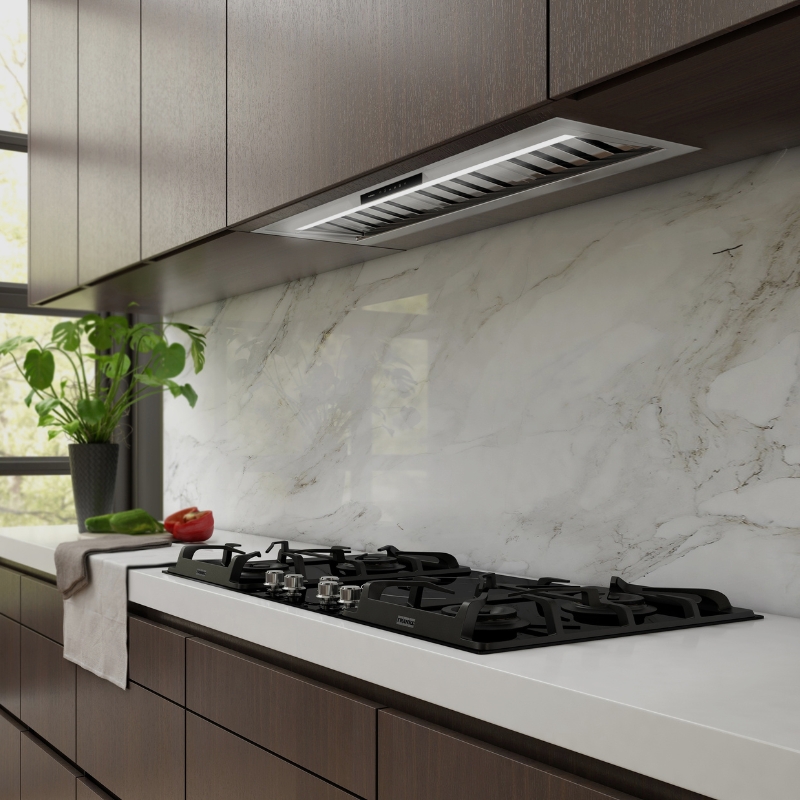
Step 1 - Measure Your Kitchen Volume
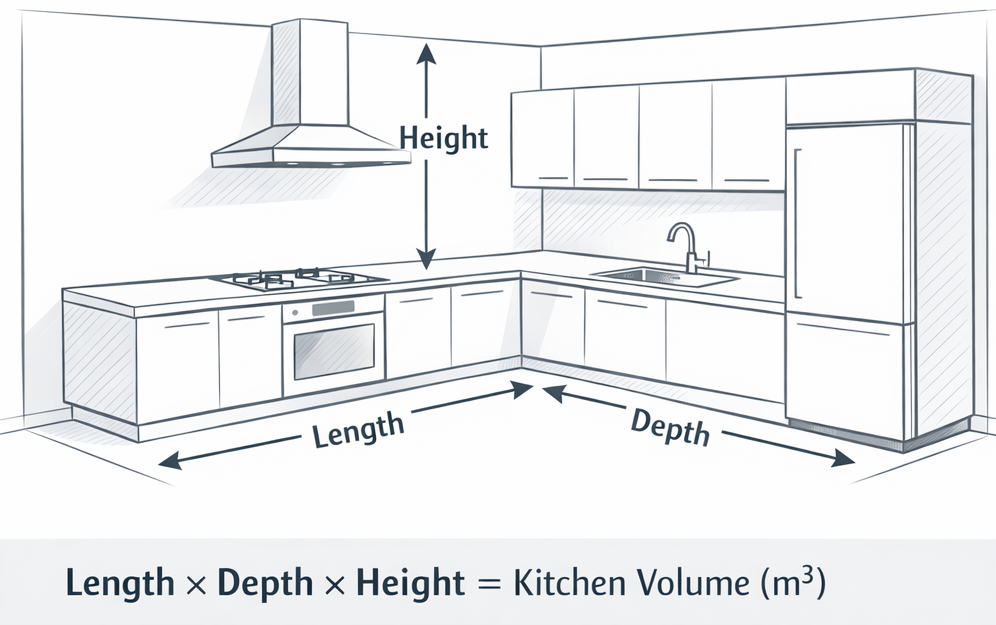
Measuring your kitchen accurately is the first and most important step in selecting the right rangehood. Your kitchen’s volume — the combination of length, depth, and ceiling height — directly impacts how much air needs to be replaced each hour.
Why kitchen volume matters:
Rangehoods remove smoke, odours, and airborne grease. If a rangehood is underpowered for the size of your kitchen, it will struggle to capture all the cooking fumes, leading to lingering smells, grease buildup, and potentially higher noise levels as the motor works harder. Conversely, overpowered rangehoods may be unnecessarily loud or inefficient.
How to measure:
Measure the length and width of your kitchen in meters.
Measure the ceiling height from floor to ceiling.
Multiply these together to get the cubic volume.
Length × Width × Height = Kitchen Volume (m³)Tip:
For open-plan kitchens, include the connected living or dining areas, as air will circulate between spaces.
Step 2 - Understand Air Changes Per Hour (ACH)
Air Changes Per Hour (ACH) is a standard method to determine how many times the air in your kitchen is replaced per hour. This ensures your rangehood is correctly sized for your cooking habits and kitchen layout.
Why ACH is critical:
Light cooking: Occasional use or small kitchens may require only 6–7 ACH.
Standard cooking: For regular daily cooking, aim for 7–9 ACH to ensure effective air movement.
Heavy/Open Plan: Kitchens with frequent cooking, large spaces, or open layouts need 9–12 ACH for optimal extraction.
How to use ACH: Calculate your kitchen volume (from Step 1). Multiply the volume by the ACH value appropriate for your cooking style.
Kitchen Volume × ACH = Required Extraction Rate (m³/hrMatch the result to the extraction rate of a Falmec rangehood.
Example:
A 50m³ kitchen with standard cooking: 50 × 8 ACH = 400 m³/hr required extraction (approximate; refer to product specs for exact matches).
Tip:
Always round up extraction needs slightly to account for obstacles like cabinets or long duct runs.
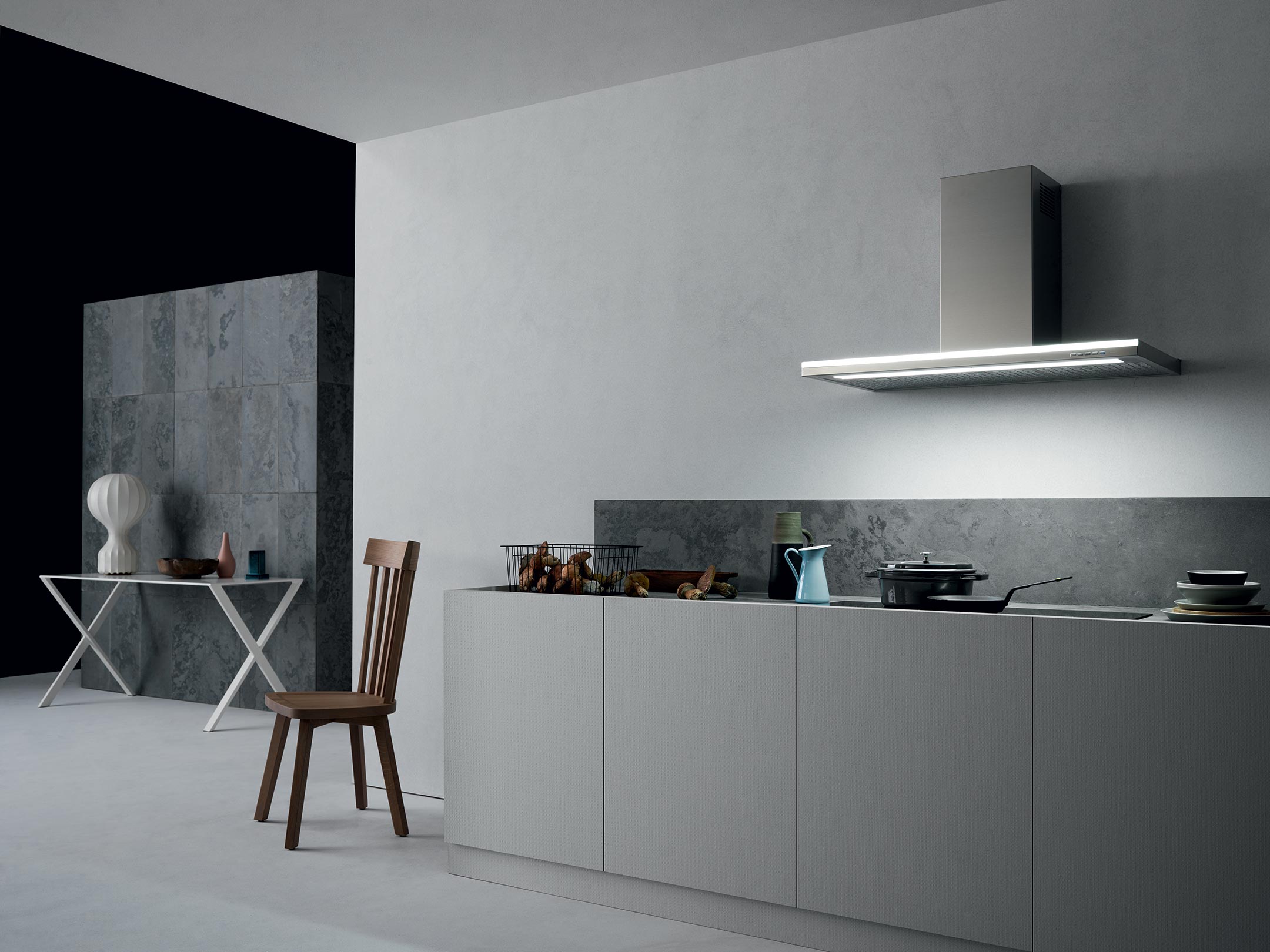
Step 3 - Match the Rangehood to Your Cooktop
The cooktop width determines the minimum width of your rangehood. A hood that is too small may not fully capture fumes and smoke, while a correctly sized hood maximises efficiency.
Guidelines:
60cm cooktop: Choose at least a 60cm rangehood.
90cm cooktop: Opt for a 90cm hood or wider.
Island cooktops: Require island-specific rangehoods.
Cooking type matters:
Gas cooktops: Produce more heat and fumes, requiring higher extraction.
Induction/electric cooktops: Produce less heat, so extraction requirements may be lower.
Installation types:
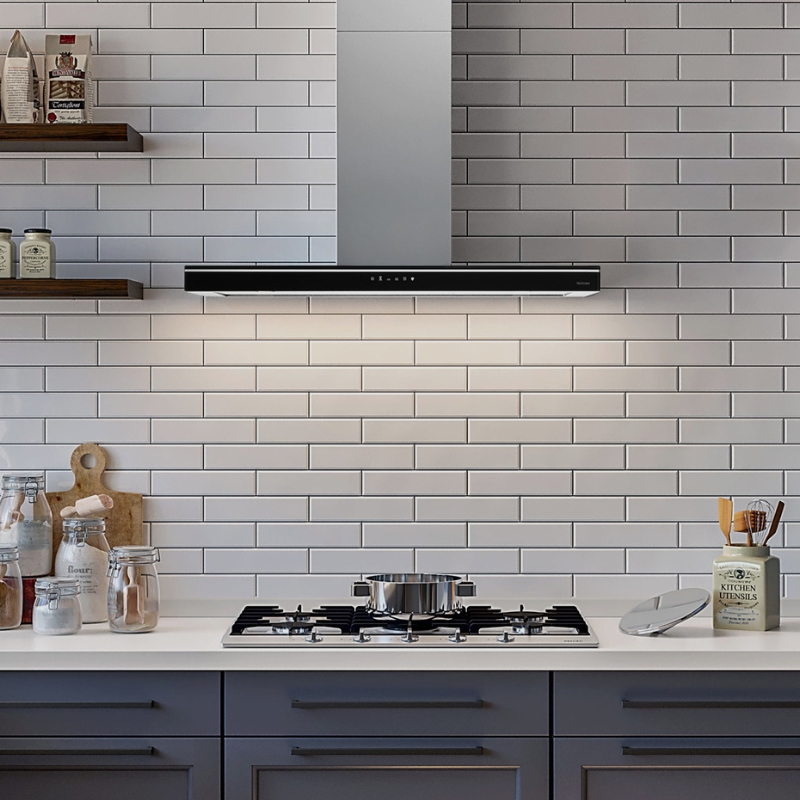
Wall-Mounted: Mounts on the wall above the cooktop.
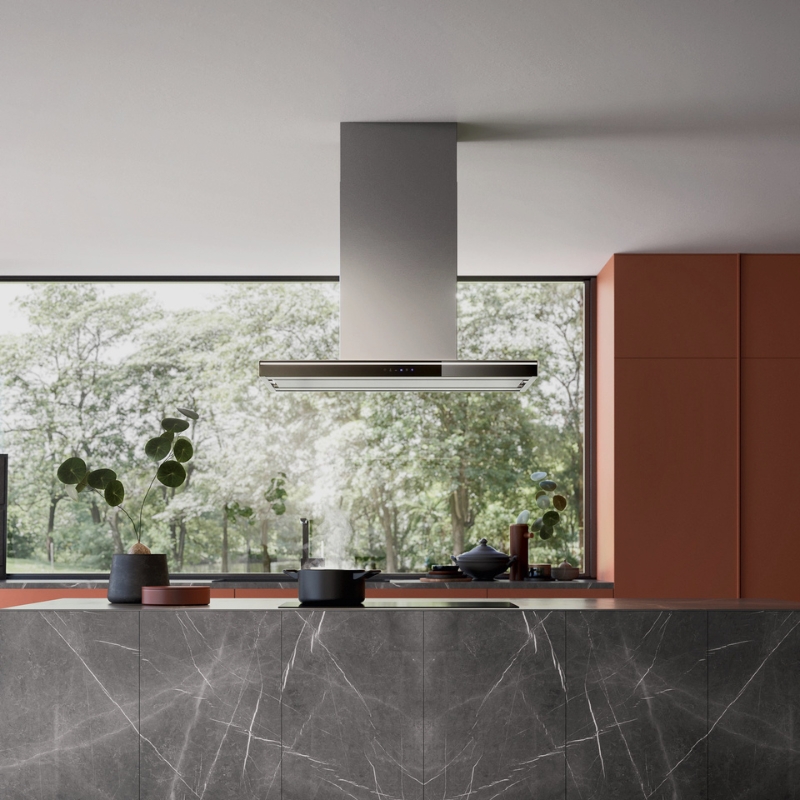
Island: Hangs from the ceiling above an island cooktop.
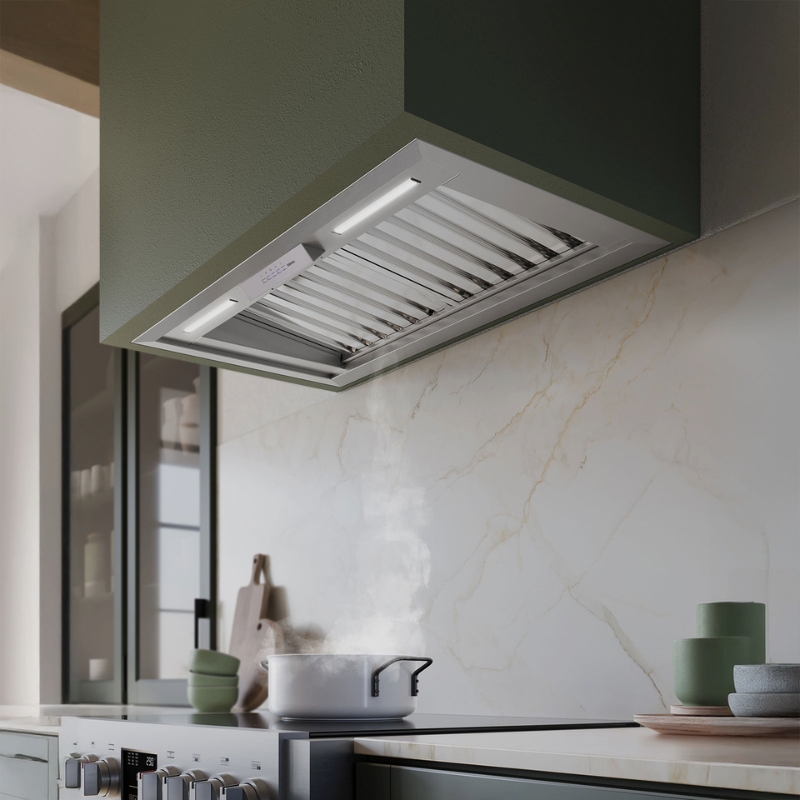
Built-In / Integrated: Installed into cabinetry for a sleek, concealed look.
Step 4 - On-Board vs Off-Board Motors
Falmec rangehoods are designed with two motor configurations to match performance needs and noise preferences: On-Board Motors and Off-Board Motors.
On-Board Motor Rangehoods:
Motor built directly into the hood.
Ideal for standard kitchens with moderate cooking intensity.
Efficient and quiet, with easy installation.
Recommended for most households where kitchen volume and airflow are standard.
Off-Board Motor Rangehoods:
Motor located externally (roof, ceiling cavity, or remote location).
Perfect for large or open-plan kitchens, heavy cooking, or gas-intensive cooking.
Reduces noise in the kitchen while providing high extraction.
Allows for duct runs to minimise acoustic impact.
Tip for selection:
Standard kitchens → On-Board motor
-Large/open-plan kitchens or high-intensity cooking → Off-Board motor
Step 5 - Consider Noise — Not Just Power
Noise is often overlooked when selecting a rangehood. Higher extraction does not have to mean louder performance — correct sizing ensures efficient airflow with minimal sound.
Tips:
Off-Board motors are quieter as the mechanical noise is removed from the kitchen space.
Match airflow to kitchen volume to avoid unnecessary strain on the motor.
Consider hoods with variable fan speeds for flexible operation.
Step 6 - Choosing the Right Extraction Range
As a general guide:
Small kitchens (<40m³): 800–1000 m³/hr extraction
Medium kitchens (40–80m³): 1000–1500 m³/hr
Large/open-plan (>80m³): 1500+ m³/hr
Tips:
Round up extraction slightly to ensure optimal performance.
For gas cooktops or heavy wok use, choose higher extraction even in smaller kitchens.
Always refer to Falmec product specs for an exact match.